Franklin Parker Preserve – Sunrise Photography Workshop with Richard Lewis
There is a sense of cathartic release in making art. It allows one to explore emotions they are usually uncomfortable with or do not know how to express. Photography as an art sparks an innate nature within the human spirit. I had forgotten what the spark of life from art felt like.
This past month, I was scrolling through Facebook, as many of us do, and I came across a photography workshop that sparked my interest. The workshop was with Richard Lewis Photography. Richard Lewis is a local New Jersey photographer who photographs the Pine Barrens. I decided to register for his workshop. I hoped to learn a little about using my digital camera.
It’s been decades since I used a camera – besides the one on my cellphone. The last time I seriously took pictures it was in the late 90s. My camera was a Nikon. I used Kodachrome film, and I would spend hours in a darkroom developing film and printing pictures. A few years bac,k I did purchase a digital camera; a Canon Rebel T6 – a good beginner digital camera. When I attempted to use the camera, it felt like I was learning how to be a photographer all over again. After only a few tries, I placed the camera back in the bag. The camera had since sat on a shelf in my living room until I decided to take a chance.
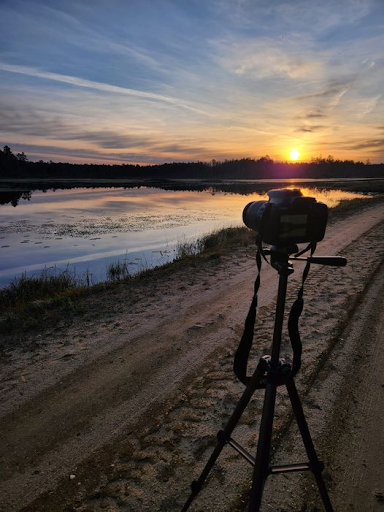
It was a Sunday morning. I am not an early-early-morning person. I tend to wake naturally around 7 or 8 am. For the Sunrise Photography Workshop, I needed to wake up at 3 am to participate. I needed to pack, load my car, get gas, and drive about 45 minutes northeast from my home. There was something peaceful about being up so early. The roads were empty. The sky was dark. I drove down Route 70 and took a right onto New Road in Chatsworth. The roads were dark, the deer were out, and I enjoyed the ride through the Pine Barrens.
After riding along the dark, winding road, I reached the area where we were to meet. The location was the Franklin Parker Preserve’s Chatsworth Lake parking area. I arrived, and one other person was waiting in the lot. I was slightly apprehensive about arriving at a dark, wooded, and isolated area at 5 am. Though the area was dark, the stars were bright in the sky, and I could not see more than two feet in front of me.
Before we set off, our instructor, Richard Lewis, provided an overview of the location. He explained that the Franklin Parker Preserve was a cranberry bog. The cranberry farmer who last owned the land was Garfield DeMarco. We learned that the farm was once the world’s third-largest producer of cranberries and that the land was purchased in 2003 by the New Jersey Conservation Foundation. The DeMarco family wanted to ensure that the land was not developed. A few partials of land were sold to families so the preserve could have people watch over the land – in a sense.
Normally, motorized vehicles are prohibited on the preserve, but we were given special permission to take our vehicles onto the grounds. Since the preserve is an old cranberry bog, our journey took us on sandy bog roads. At points along the road, we encountered areas where water once flowed from the bog water reserve into the cranberry bog. These areas would look to be flooded, but he assured us that they had concrete bottoms and our cars would pass through the flooded roadway.
Stop 1: Sunrise
Arriving at our first stop as the first morning light was beginning to appear, we parked our cars and walked along a sandy roadway for sunrise photos. We spent about two hours at this location. The sky went from pink to orange as the sun rose. A sight to behold.
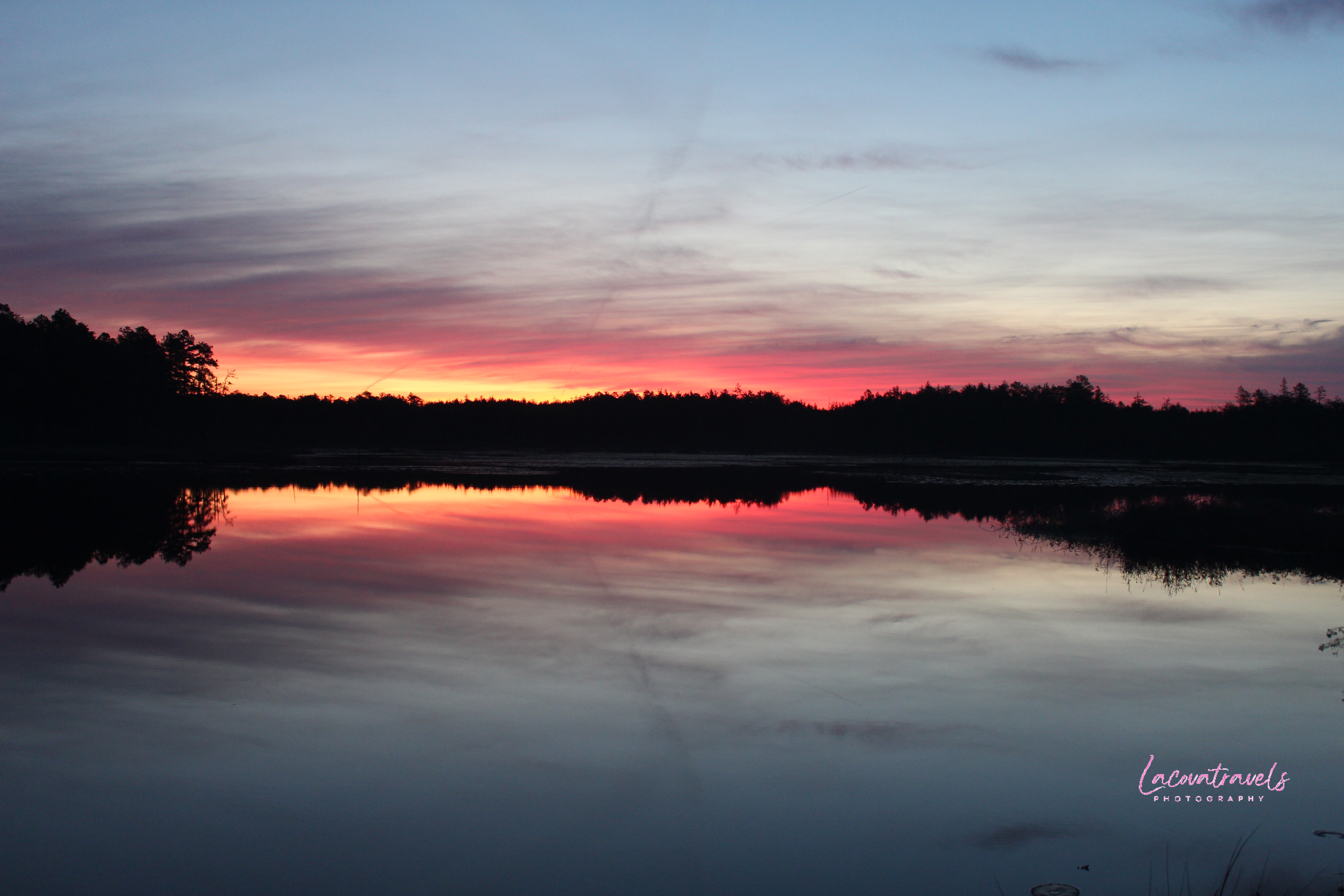
In this area, the path along the water curved to the right. We were informed that the land adjacent belonged to a farmer and was not part of the preserve. At this point in our journey, I did not think any sight could be more breathtaking than the sunrise, but the Franklin Parker Preserve continued to provide stunning landscapes around each curve. In the photo below, in the far distance, the barn from the farm can be seen- if one looks closely.
Stop 2: Water Pump House
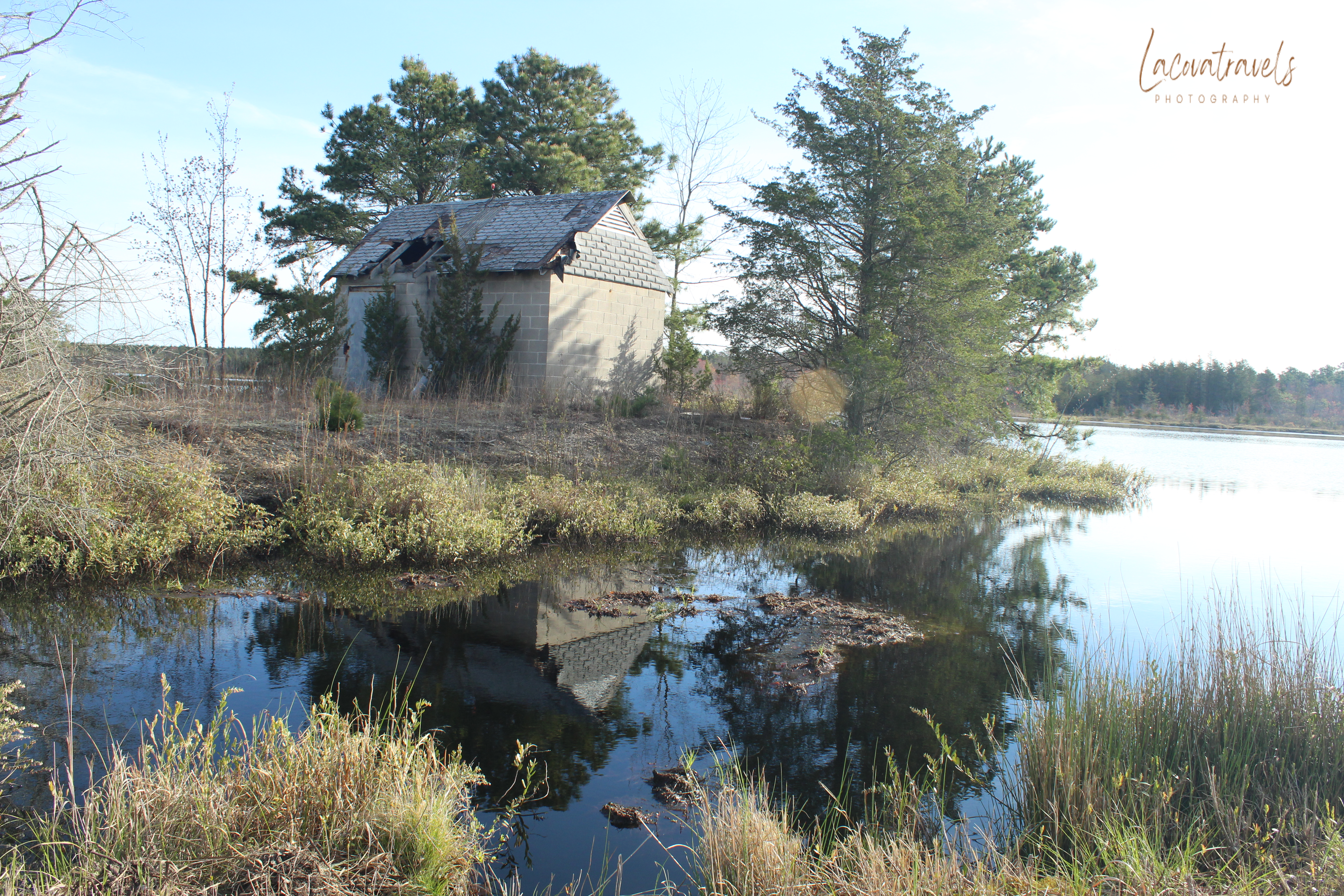
Next, we drove to a second location within the reserve – a retired cranberry bog with a water pump house. Many of the bogs have been turned back to the area’s natural wetlands. Pumphouses are sprinkled throughout the entire reserve, as they were once used to help flood the bogs. As we walked along, the birds began to move about, and I was starting to feel more comfortable with my camera. It was about 8 in the morning, but for me, it felt so much later. I was growing tired.
Stop 3: Ghost Forest
New Jersey is home to a few Ghost Forests. One in Double Trouble State Park and another in Byrne State Forest. Ghost Forest can be found from Maryland to Massachusetts. They are typically created due to sea level rise. When Hurricane Sandy, in 2012, moved through New Jersey, White Cedar trees were flooded with saltwater, causing them to die. What was left were forests of dead trees. At Franklin Parker Reserve, I was told that one can find a Ghost Forest. It is unclear to me if the death of the trees was caused by saltwater or freshwater. Nonetheless, it is stunning to see.
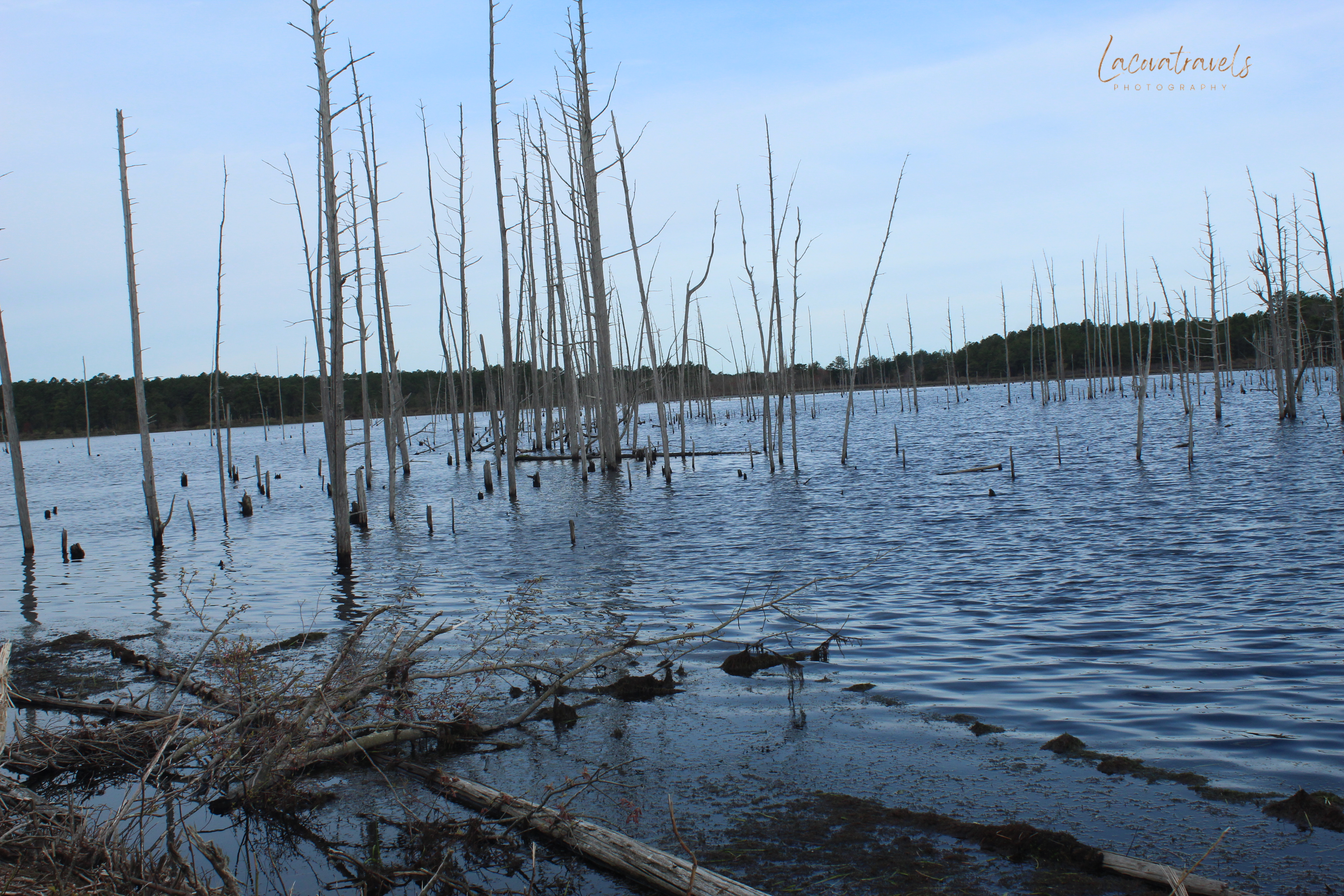
Among the Ghost Forest, there were many Red-winged Black Birds. A bird I had never seen before, even though I have lived in New Jersey my entire life. The birds flew, swooping through the air. There are times in life when things are just too beautiful to capture with a camera, and instead, I found myself enjoying the moment rather than capturing it. But, I was able to take a picture of one of the birds in a tree, after the beautiful show had ended. In the photo, one will notice the distinct red mark on the bird’s wing. Fun fact: this bird is polygnous – the males tend to have more than one mate at a time. Unlike the geese, I am so familiar with. I am still learning how to take photos of birds
Stop 4: Last Pump House
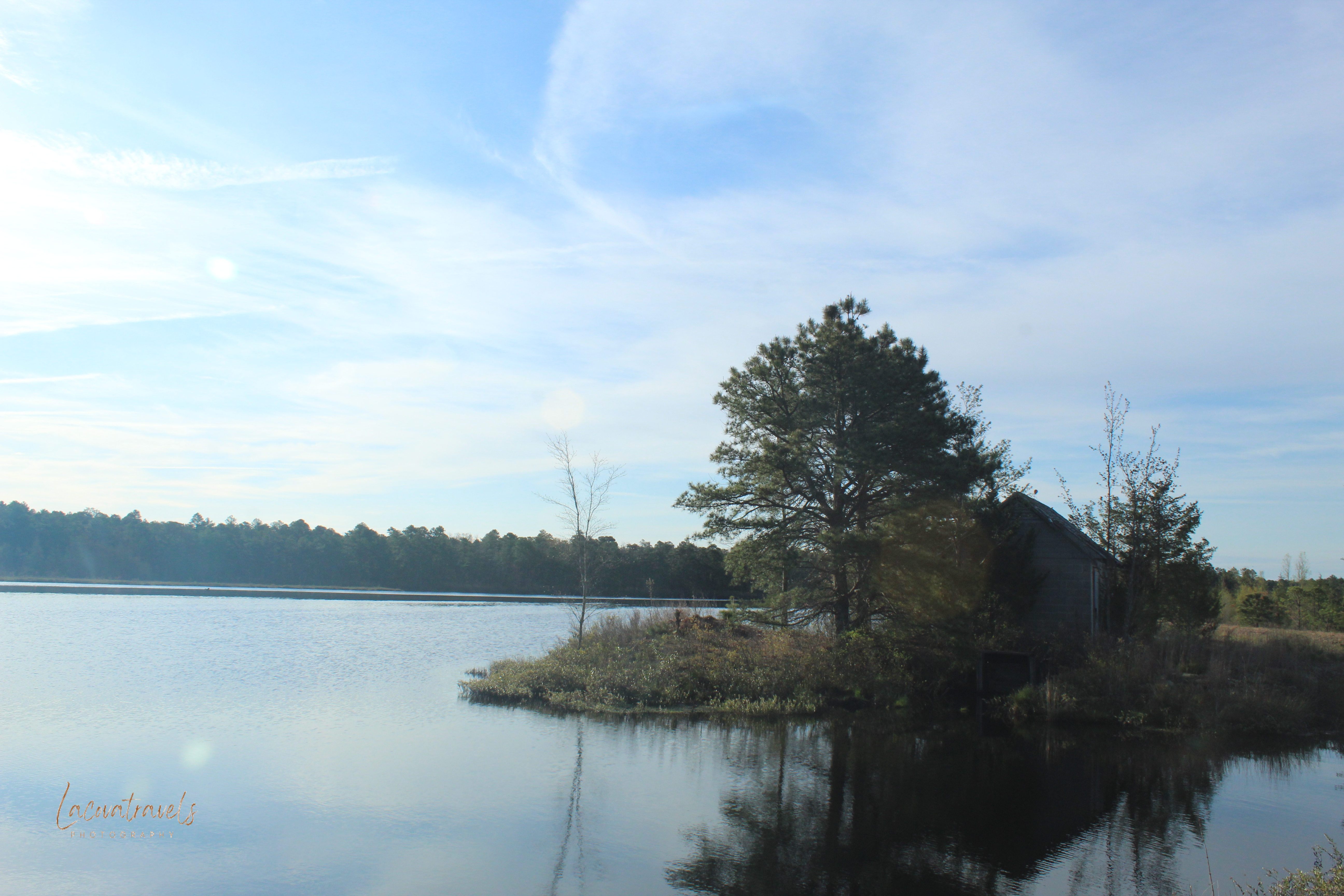
At this point in the day, I was exhausted. We had been out in the field for a little over 3 hours. Yet, there was one last stop, and the moment I stepped out of the car, I was energized by the landscape. A mother goose was sitting on her nest. A group of Red-winged Black Birds was dancing about the air, and the reflection of a pumphouse glistened in the water.
Visiting Franklin Parker Preserve
Anyone can walk the preserve. A hiker on the Batona Trail will find themselves walking through the preserve. The Baton Trail was rerouted to go through the land. And I can assure any hiker that they will not be disappointed. The landscape is gorgeous, and they may encounter various species of animals, birds, and plants. When visiting, please respect nature and leave no trace behind. I am looking forward to my return and continuing to improve my photography.

