
Women of the Pines Entry Two -Mary Treat
Mary Treat – The NJ Naturalist the World Forgot
Overview
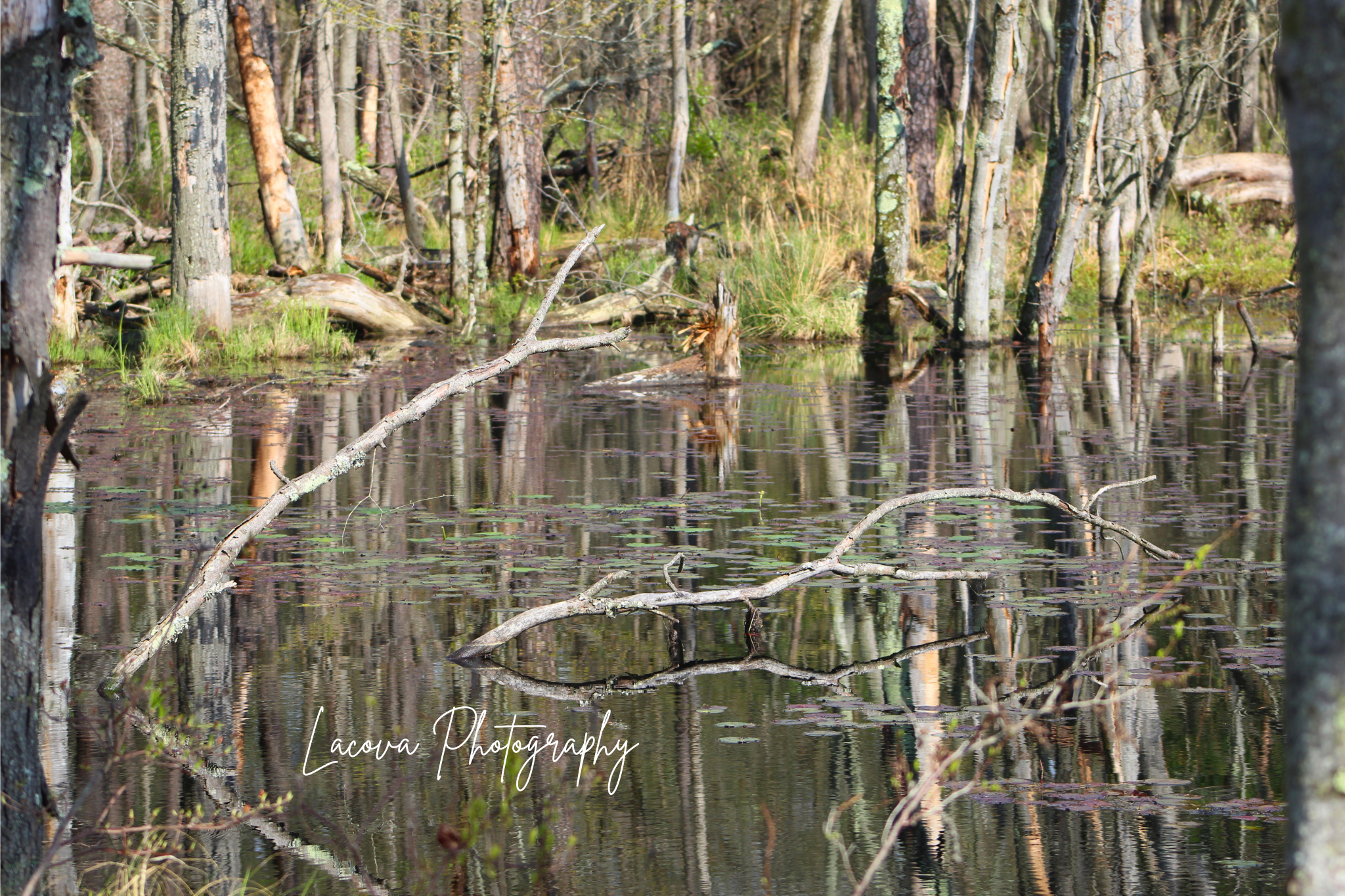
Though time has erased her “Living Laboratory” in Vineland, New Jersey, her name still lives on, hidden within the Latin names of various insects and plants that other scientists had named for her several discoveries. So admired, so respected was Mary Treat that Auguste Forel, Gustav Mayr, and Sereno Watson named insects and plants after her. It is fitting that nature has reclaimed her backyard laboratory and the home she lived in; as nature in the Pine Barrens has always restored what belongs to it: from the old cranberry bogs to the old sawmills, paint factories, iron mills, and scientific laboratories. So willing are the swamps and bogs to preserve their history until the world is ready to hear their voices.
Mary Treat lived a life full of passion and admiration for the natural world around her. From a young age, she spent time examining the smaller creatures of the world. She noticed what others walked past. To read the letters between her and Darwin and to hear her passion for carnivorous plants, how they lure and trap their prey, can make one want to get down on their hands and knees and crawl around in the grass looking for ants, spiders, even Bladderworts or Pitcher Plants. Her passion for nature, relayed by Deborah Boerner Ein in her novel, Mary Treat: A Biography, transcends the page, and Mary Treat’s zeal for nature can be felt through time.
Living to her ninety-second year, 1830 – 1923, she lived through an age of profound technological changes, from railways, to electricity, to the Model T car. She lived through two wars: the Civil War and World War 1 and was fortunate enough to walk among some of the finest members of the scientific world, sharing her discoveries, and at times correcting theirs, specifically Charles Darwin’s theories.
Vineland:
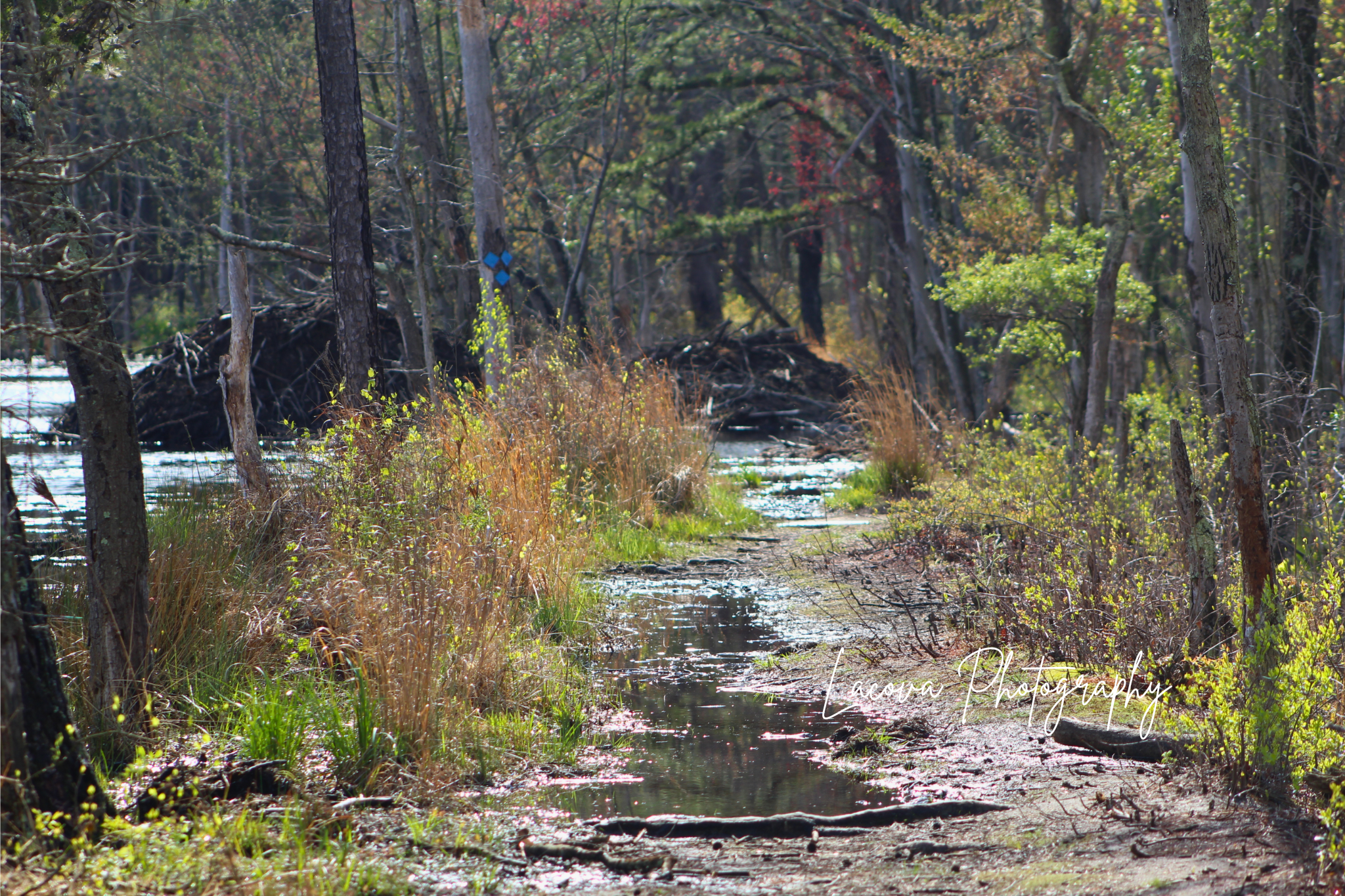
According to Deborah Boerner Ein in Mary Treat: A Biography, Treat’s name given to her at birth was Mary Adelia Davis. Her role as a minister’s daughter impacted her worldview, and possibly her relationship with her second husband. Treat, in her early twenties, married Mr. David R. Allen, a minister’s son, who may have died in the Civil War. As the timeline in Ein’s book shows, Treat was moving from one family home to another until the records of another marriage to a man named Dr. Joseph Treat. Early in her marriage to Dr. Treat, she and her husband moved out west (Iowa), possibly to land available through the Homestead Act. Mary made several trips to New Jersey, including a trip to Hammonton, New Jersey, in 1866. Eventually, the couple decided to move to New Jersey. As per Ein’s biography, Dr. Treat and Mrs. Treat were attracted to the town of Vineland, which was founded in 1861 on utopian ideals, several years before their move in 1868. While Vineland is within the New Jersey Pine Barren’s ecosystem, it is not part of the New Jersey Pinelands National Preserve, which was established in 1978. This ecosystem in Treat’s backyard, her “Living Laboratory,” allowed her to study as many unique plants and animals as possible, specifically carnivorous plants found in the Pine Barrens. Treat often traveled to nearby towns, now located within the Pineland Preserve, such as Astion and Batsto.
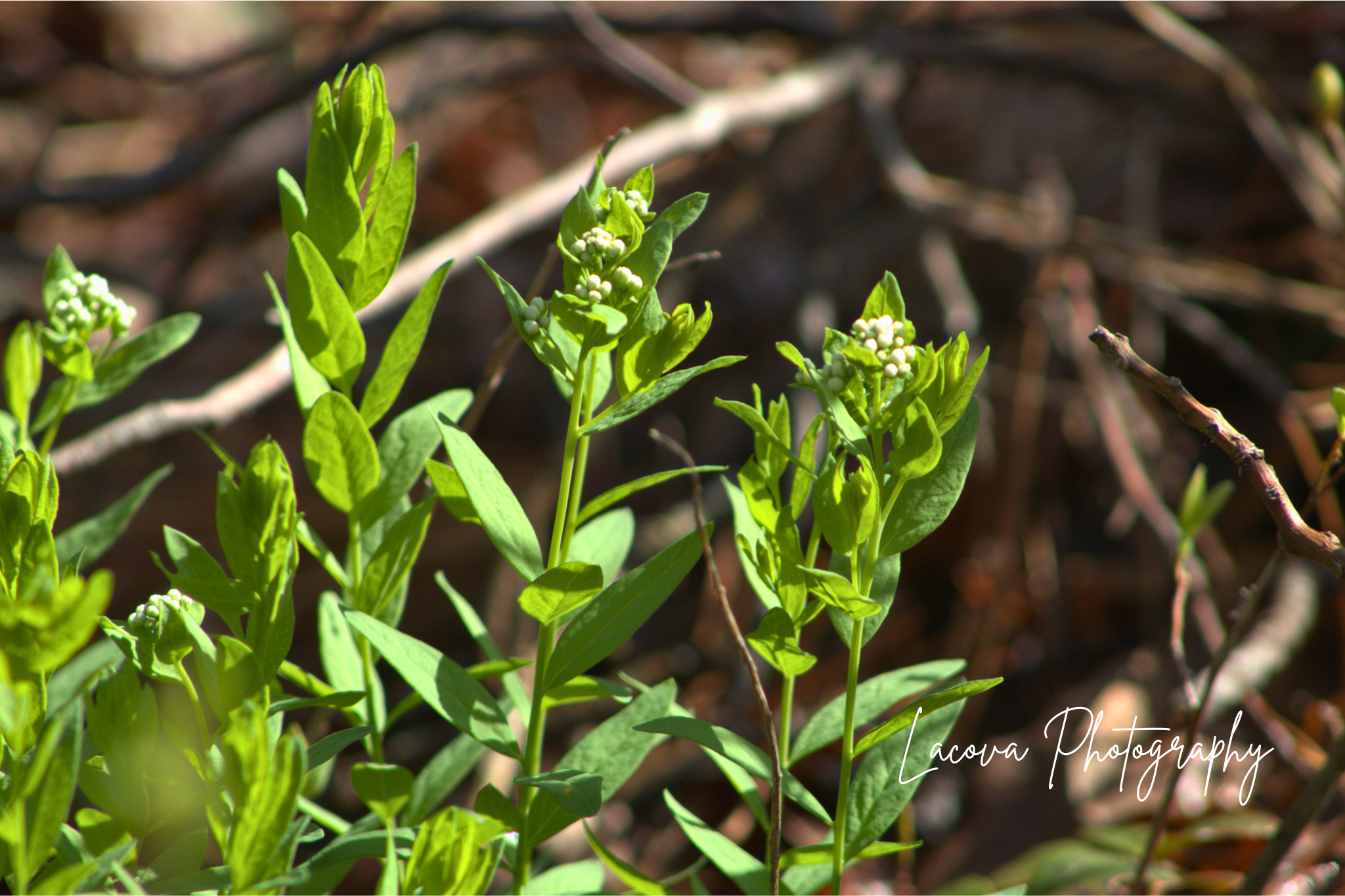
She wrote about one of these journeys to Darwin. In a letter dated July 28, 1873, as referenced in Treat’s biography, she writes of the sundew, “But first allow me to tell you of the immense quantity I found, in its fullest vigor, just coming into bloom. – On the morning of July 7th, I started for the country, some 30 miles distant, and before noon of the same day, was in midst of acres of this beautiful plant, standing so thick as to exclude almost everything else” (Ein 238). The abundance of her findings brought her so much joy. Through her correspondence with Darwin, a passion for nature jumps from the page; her written voice so strong it feels as if one is sitting at a nearby table listening to the debate between two great minds. The one thought that won’t escape my mind is that Darwin knew of our little Pine Barrens of New Jersey through the passionate eyes of Mary Treat!
Circle of Scientist
Mary Treat was studying carnivorous plants before Charles Darwin even published any articles or books about his research. Treat was a well-respected naturalist and botanist among fellow scientists, including Asa Gray. She was in frequent correspondence with Gray, often discussing her findings with him and providing Gray with various plant specimens for his Herbaria at Harvard University, where Gray was the initial curator. Gray himself corresponded with Charles Darwin, thus suggesting that he and Treat write to one another to discuss their common research.
Mary Treat and Darwin wrote fifteen letters to one another, in which Treat explained to Darwin her findings on carnivorous plants found in the Pine Barrens. In one of her letters, she informed Darwin that a particular aspect of his research on carnivorous plants was not correct. He did not agree with her findings, yet later in another letter he apologized and acknowledged that she was indeed correct. These letters can be found in the Special Edition hardcover of Mary Treat: A Biography by Deborah Boerner Ein. These letters are a treasure to read. Not only do her readers have the chance to peer into the mind of Charles Darwin, but they can also explore the fantastic writings of Mary Treat.
Contributions and Publications
Throughout her lifetime, Mary Treat wrote over 100 articles that were published in various magazines. She wrote on topics such as ants, butterflies, and carnivorous plants. Her research on butterfly gender development sparked a strong discussion between her and Darwin. In addition to her articles, she published five books. Two of the most popular books being Homes Studies in Nature (1885), Injurious Insects of the Farm and Field (1882), and after Asa Gray’s passing, she wrote an essay titled Asa Gray: His Life and Work. All are still available today.
In Treat’s lifetime, several plants and insects were named after her. The plants that became her namesake were often the plants she had discovered and sent to fellow scientists. Her legacy can be found in the names of Zephyranthes treatae – lily (amaryllis); Aphaenogaster treatae – harvester ant; Blonocnema treatae – oak gall wasp.
Voices of today who speak for the Women of the past:
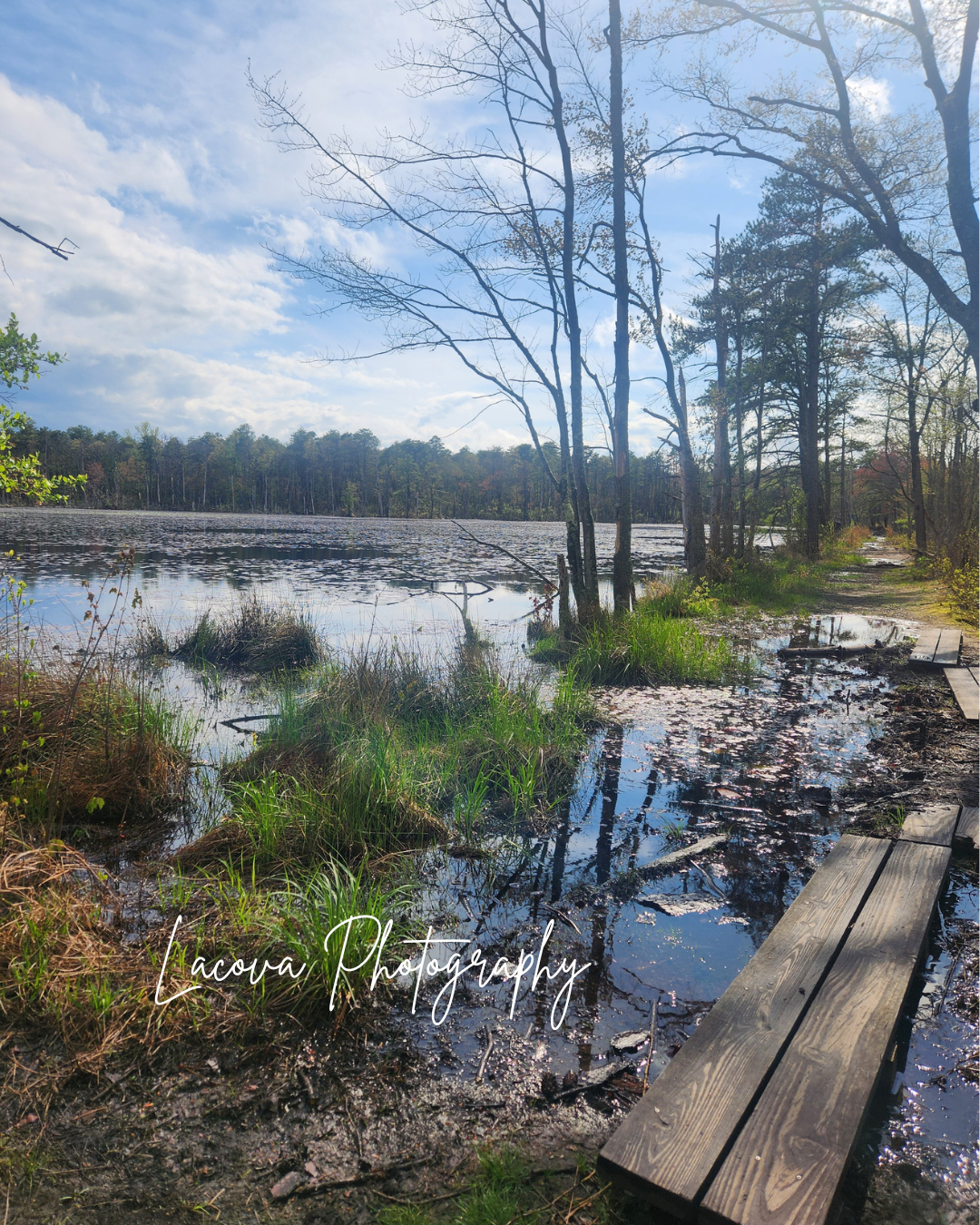
Mary Treat, just like her “Living laboratory,” has since faded into nature, but the Pine Barrens are ready to return her voice to the world. I set out to discover Women of the Pines and bring their voices to the forefront, but I now wonder if it wasn’t the Women of the Pines resurfacing from the Cedar Swamps and sugar sand soil to ask me to join the community of women speaking for the forgotten ones of the pines.
The Women and Their Work:
Biography: I highly suggest that you read the biography written by Deborah Boerner Ein, titled Mary Treat: A Biography. Not only will you learn more about Mary Treat and her fellow scientists, but you will also open a window to the soul and mind of Mary Treat. As I read the biography, I learn about a woman living over one hundred years ago, wandering the Pines and swamps I wander today. Her awe for the world of the Pine Barrens and the nature around us is the quiet return to nature the world needs. This year, 2026, we had scientists travel the furthest ever from Earth and circle the moon. What these scientists realized, while away from our small “spaceship called Earth” (Victor Glover), is the same thing Mary Treat noticed in her backyard. Glover’s words, as he orbited above the Earth, are what Mary Treat did over one hundred years ago: “Keep your world small, keep your focus on the thing right in front of you, and slowly widen out that world-view.” So just as Treat did, take a moment. Stop. Pause. Admire the flower. Watch the ants working on their hill. Feel the calm they offer. And remember, “Earth is amazing, it’s beautiful, it protects us, and so we should work hard to protect it”(Victor Glover).
Documentary: Helga Merits is working to create a documentary about Mary Treat. Merits herself wants to bring forth the forgotten voice of Mary Treat. Merits says on her funding page, “Despite influencing one of history’s greatest scientists, her name has nearly disappeared from public memory.”
Here’s how you can join the community:
The $20 Challenge
Helga Mertis is asking “for 500 people to contribute $20 to the production of the documentary, Mary Treat: A Love Letter to Nature.” You can donate by clicking on the hyperlink for the Fundraiser by Helga Mertis. Take some time to watch the trailer to learn more about the project.
A note from Deborah Boerner Ein: “The total is shown in Euros, but when you hit the donate button, some dollar amounts will appear. Be sure to write in the amount rather than selecting a figure from the buttons. Also, the site will automatically take a tip UNLESS you write in zero on that field.”
I purchased my copy of Mary Treat: A Biography from the Pineland Alliance Gift Shop in Southampton, NJ.
You can also obtain a copy from Amazon , Lulu , or from Deborah Boerner Ein’s website .
Note from the author Lacova:
I would like to thank Deborah Boerner Ein for taking the time to provide feedback and edits on the article “Mary Treat: The NJ Naturalist the World Forgot
I would also like to thank Mrs. Steller for her feedback on the article “Mary Treat: The NJ Naturalist the World Forgot.”
It means a lot to have the support of women whom I admire and respect.
Sources Used in this Article
https://www.brainyquote.com/authors/victor-j-glover-quote
https://www.gofundme.com/f/a-film-about-mary-treat-a-love-letter-to-nature

